

Back Pain
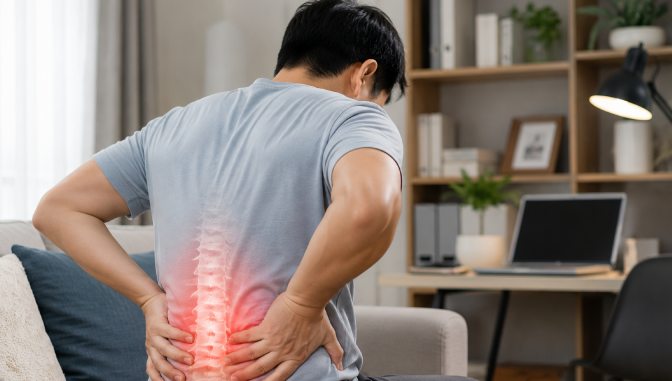
With approximately 80% of the world’s population developing symptoms at any age and in any given year, back pain is one of the most common health issues in modern society, second only to cold and flu. Chronic or acute, back pain is associated with over 60 illnesses and underlying conditions, impacting day-to-day life on many levels.
How can we help?
Recommended by the World Health Organisation (WHO) for the treatment of lower back pain, Chinese Medicine has long been known to be effective at pain relief and is a popular and well-researched method for managing back pain.
Although the mechanisms by which Chinese Medicine works are not completely understood, trials for treating back pain show great results with very little risk of side effects.
As reported by the National Institutes of Health (NIH), studies suggest that some Chinese Medicine treatment modalities, particularly Herbal medicine, Acupuncture, acupressure, and cupping, could be effective and safe in treating the pain and disability associated with back pain, significantly easing symptoms in both acute and chronic conditions.
Chinese Medicine is thought to work for back pain primarily by increasing blood circulation to the affected or injured areas. This improves oxygen and lymph supply, reducing swelling and inflammation while facilitating cell metabolism and speeding up the body’s healing process.
Additionally, research has shown that Chinese Medicine seems to trigger the release of pain-relieving neurochemicals such as endorphins, serotonin and corticosteroids which also contribute to easing pain and inflammation.
How quickly will you see results?
The minimum course of treatment we recommend to start seeing consistent results is usually 4 weeks. However, you will usually notice improvements after just one or two sessions.
The number of treatments needed will vary from patient to patient, according to their overall health condition, and on whether the pain is acute or chronic. In most cases, treatments can provide instant release of knots, tension and muscle pain. While in others, it may take several courses for the body to regain its normal function and for the issue to be resolved long-term.
About Back Pain
Back Pain is the most common orthopaedic complaint, ranging from mild to severe and affecting 80% of the Western population at some stage in their lives and at any age, from young people to older adults.
Made up of strong muscles groups, tendons, and ligaments for optimal support and movement, the back covers a huge area – from just below the neck and all the way down to the tailbone – and is normally divided into three main sections: the upper back (connecting to the neck), the mid-back and lower back (connecting to the hip, tailbone, and buttocks).
Identifying the location of back pain is crucial since possible causes, prescribed treatments and advice vary accordingly.
Back pain is usually classified as acute or chronic:
Acute back pain, accounting for about 80% of reported cases, may be mild or severe, can be caused by an accident or injury and it’s generally short-lived, lasting from one to seven days. Most commonly observed in young people and adults, acute back pain is generally musculoskeletal in nature and recovers well with appropriate treatment, rest and change in poor lifestyle habits.
Chronic back pain, accounting for about 10% of reported cases, is usually mild, only occasionally severe, it may be related to other conditions or may have no identifiable cause. Typically long-lasting or recurring, it can last for several weeks or months. Chronic back pain is most commonly seen in older adults and seniors, more susceptible to age-related pathologies and normal, gradual muscle and tissues wear and tear.
Whether acute or chronic, mild or severe, emotional stress may add to the pain, causing physical tension and making existing back problems worse.
Causes can be many. Most cases of acute back pain are classified as
‘non-specific’ back pain, meaning that the cause is unknown or not clear. Minor strains, sprains, overuse and poor posture or lifestyle habit are usually the main culprits.
Less than 10% of back pain cases can be caused by other health conditions, such as inflammation (osteoarthritis, spondylitis), ruptured or herniated Intervertebral disc, spinal stenosis, kidney diseases, osteoporosis, and some type of cancers or tumours of the spinal cord or bone and bone marrow.
Although the majority of back pain cases are of a ‘non-specific’ nature and might be easily treated, pain is a signal that should never be dismissed. Medical attention is necessary to discount the possibility of underlying diseases and for a tailored treatment plan.
Western Medicine view
In the Western medical view, identifying the exact cause of back pain is often difficult. Anything that puts pressure on the back muscles or nerves can cause pain. Any illness or damage to the spine can also cause pain. That’s why in order to rule out any underlying conditions and prevent the development of debilitating and more serious complications, specialist visits and examinations are often recommended.
You may be asked to have blood tests and scans such as X-ray, CT, MRI, Myleogram, Bone Scan or others.
Doctors generally prescribe one or more of the following treatments:
- Medication
- Rest
Heat and cold
Posture training
Exercises
Weight loss
Stress management
Spinal manipulation
Surgery
Within the Western medical model, the focus of back pain treatment is primarily on symptoms and pain management, especially when the cause is unclear and diagnosed as ‘non-specific’. Most people can be treated with rest, exercise and medication such as analgesics, muscle relaxants and nonsteroidal anti-inflammatory drugs (NSAIDs). The most common treatment doctors recommend for severe back pain is bed rest, usually, for two to three days – particularly in the most acute phase.
Additionally, most physicians will recommend lifestyle changes, including weight loss, stress management and relaxation techniques, as well as specific exercises to strengthen the core, back and abdominal muscles, or improve posture. Heat and cold therapy, to relax muscles and soothe or numb painful areas also can help ease the pain.
In the most severe cases, spinal surgery might be suggested. Surgery does not always work for many common kinds of back pain, and it is difficult to know who will be helped and who will not. People with sciatica or spinal stenosis seem to benefit the most from it.
An orthopedist or a specialist medical professional will help decide if a back operation is necessary.
Chinese Medicine view
‘If there is free flow, there is no pain, If there is no free flow, there is pain.’
According to Chinese Medicine, several factors can cause back pain, from constitutional weakness and genetics to age, long-term illnesses, tissue or muscle weakness and tightness, repetitive strain and overuse. These can make the body more vulnerable to injuries or trauma. Additionally, a sedentary lifestyle, lack of exercise and poor diet can also make the body more susceptible to injuries and external agents – Wind, Cold, Dampness, or Heat – resulting in different symptoms and patterns.
Treatment will be determined after the root cause of the back pain is diagnosed and primarily aims at increasing blood circulation, hence reducing pain and inflammation, and tonifying the organ systems affected while strengthening the whole body to make it more resilient to either external or internal agents.
A course of treatment may involve moxibustion (the use of dried herbs burnt close to the skin) and Chinese herbs and Acupuncture. Chinese deep tissue massage (Tuina) is also highly effective in easing back pain with good results after just one session.
Some of the main causes of back pain, according to Chinese medicine, are:
Stagnant circulation
Poor posture or injury can lead to a blockage and stagnation of Qi and blood in the back. Left untreated, the Qi stagnation can lead to blood stagnation, and what was a dull ache can become a very sharp fixed pain. Qi stagnation of the lower back is sometimes found in women who have painful periods.
Another cause of stagnation is the invasion of cold or dampness into the acupuncture channels that go up and down the spine. In Western culture this is generally what is known as catching a cold, and in Chinese Medicine theory we can catch a damp too.
If cold or damp weather aggravates your back condition, then it is likely that you’ve got some cold or dampness causing stagnation.
Damp heat
In the context of Chinese medicine’s understanding of back pain, this pathology can cause radiating pain that actually circles the lower back and down into the groin area, and is often associated with an infection in the urinary tract or other area in the lower abdomen. This might be kidney stones or possibly a bladder infection.
Weakened Kidney
According to Chinese Medicine theory, back pain (especially lower back) can be caused by a Kidney deficiency (usually due to excessive sexual activity or fatigue). If this is the case then the doctor will usually prescribe herbs to clear this deficiency.
Lifestyle advice
Whether you opt for a Western or Eastern approach to managing your back pain, consider including a few lifestyle changes as you journey towards a more pain-free and healthier life.
Here are some tips that you can implement straight away.
- Remind yourself to maintain a good posture at all times, while sitting, lying down, lifting or exercising. This is often the best way to prevent back problems.
- Manage your stress levels and have proper rest.
- Try not to stay sedentary in one position for prolonged periods of time.
- Take a break from vigorous exercise if it makes your back pain worse. Instead, switch to more gentle activities, like Qi Gong or Tai Qi, walking and swimming. These are highly recommended as can keep your back problem under control.
- Exercise, stretch and do some strength training at least three times a week. This can make your arms, legs and back stronger, thus preventing or relieving back pain.
- Watch your weight. Being overweight can put stress on your lower back.
- Try to minimize or eliminate sugar, processed foods and drinks, alcohol.
- Drink plenty of water, to flush out toxins and reduce inflammation.
These tips will not only complement and enhance the benefits of your back pain treatment but also improve your overall health and well-being.
References
Coan R et al. The acupuncture treatment of low back pain: a randomized controlled treatment. American Journal of Chinese Medicine, 1980, 8:181-189.
Gunn CC et al. Dry needling of muscle motor points for chronic low-back pain. Spine, 1980, 5(3):279-291.
Lehmann TR et al. Efficacy of electroacupuncture and TENS in the rehabilitation of chronic low back pain patients. Pain, 1986, 26:277-290.
MacDonald AJR et al. Superficial acupuncture in the relief of chronic low back pain. Annals of the Royal College of Surgeons of England, 1983, 65:44-46.
Mendelson G et al. Acupuncture treatment of low back pain: a double-blind placebo-controlled trial. American Journal of Medicine, 1983, 74:49-55.


